The World Cup deploys the most ambitious technological architecture in history, transforming massive data into real-time decisions through generative artificial intelligence, computer vision, and three-dimensional modeling. Rocbird applies these principles of scalability, precision, and explainability to resolve the operational complexity of your business.
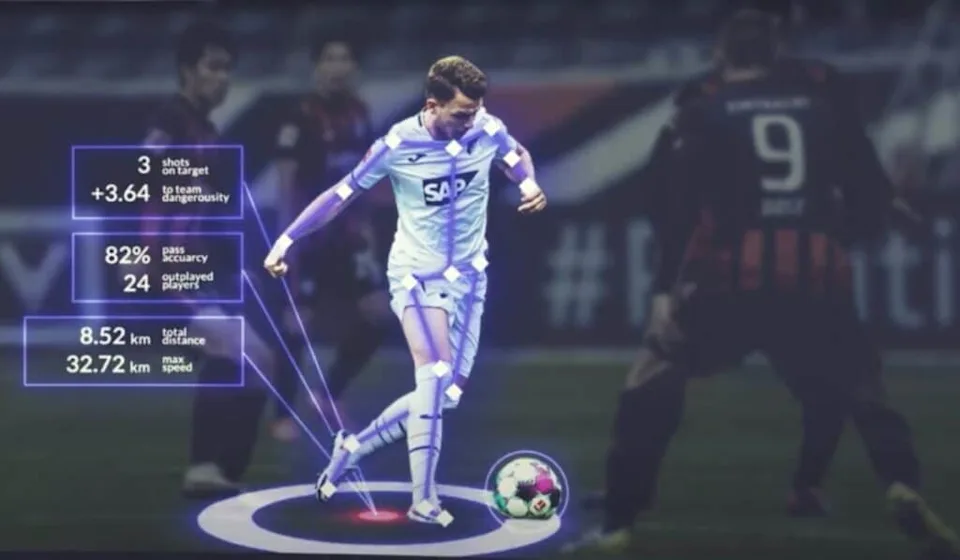
The World Cup is not just the most-watched sporting event on the planet. In 2026, it is also the most ambitious technological deployment football has ever seen. FIFA has turned the tournament into a massive-scale testbed, featuring artificial intelligence, real-time data analytics, and new human-machine interfaces.
Data in every millimeter
The official ball, Adidas' Trionda, carries a sensor that records position, rotation, and impacts 500 times per second. This volume of data feeds the semi-automated offside system: 16 optical tracking cameras installed in each of the 16 stadiums, generating more than 150 million data points per match, compared to the 12 used in Qatar.
The referee's perspective as an audiovisual product
Referee View is a body camera integrated into the referee's uniform. FIFA and Lenovo developed an image stabilization system that significantly reduces motion-induced distortions. The result is a real-time broadcast from the central referee's perspective, with high enough quality for television production. This is not an officiating tool: it is AI applied to the spectator experience.
Avatars, tactical analysis, and narrowing the gap
The 1,248 called-up players will be scanned in less than a second. The resulting three-dimensional models allow for the recreation of controversial plays with millimeter precision. This same data feeds Football AI Pro, a generative AI platform that all 48 national teams can query in natural language to obtain tactical analyses, match summaries, and statistical visualizations. FIFA explicitly stated that the goal is to bridge the technological gap between national teams with different resources.
What does this have to do with business?
Everything. What FIFA implements in a stadium is a concentrated version of what organizations face daily: massive volumes of data, real-time decisions, accessible interfaces for non-technical users, and the need for explainability. Referee View is computer vision with AI stabilization. Football AI Pro is a generative AI assistant built on structured data. Player scanning is data capture and modeling at scale.
The World Cup tests them on a global scale; businesses face them every day, without the stadium or the cameras. At Rocbird, we work on those same principles: data volume, real-time decisions, and explainability, but applied to business operations. If your company makes complex decisions with data at stake, we can help you build the architecture to support them.


